This guide is designed to support people who use wheelchairs and are interested in enjoying the freedom and independence that motorcycling can offer.
Whether exploring adapted motorcycles for the first time or seeking the latest information on trike conversions, this guide offers practical advice, real-world examples, and up-to-date contacts for specialist adaptive engineering services.
The adaptations and solutions described here are intended to help people to overcome common challenges, make informed choices and enjoy safe, comfortable, independent riding.
As every individual’s needs and preferences are unique, we recommend contacting the National Association for Bikers with a Disability (NABD) directly via office@thenabd.org.uk for personalised advice and guidance.
Common Causes of Wheelchair Reliance:
Many disabilities can result in a person becoming reliant on a wheelchair. Some of the most common include Spinal Cord Injuries, Amputations, Multiple Sclerosis (MS), Muscular Dystrophy (MD), Motor Neurone Disease (MND), Arthritis, Cerebral Palsy, Stroke and Ataxia.
Key Challenges for Motorcycle Use:
The challenges faced by many people who use wheelchairs and wish to ride specially adapted motorcycles independently often include:
- Reduction in, or loss of, motor function/control
- Reduction in, or loss of, neurological function/control
- Limited mobility
- Inability to operate foot controls
- Upper body stability concerns
- Difficulty transferring independently to and from a wheelchair
- Stowing and retrieving a wheelchair independently
- Increased susceptibility to pressure sores
The severity and impact of these challenges can vary greatly from one individual to another. As a result, the practical solutions and adaptations required can also differ significantly.
Getting some personalised advice and information from the NABD is strongly recommended before pursuing adaptations.
Stability:
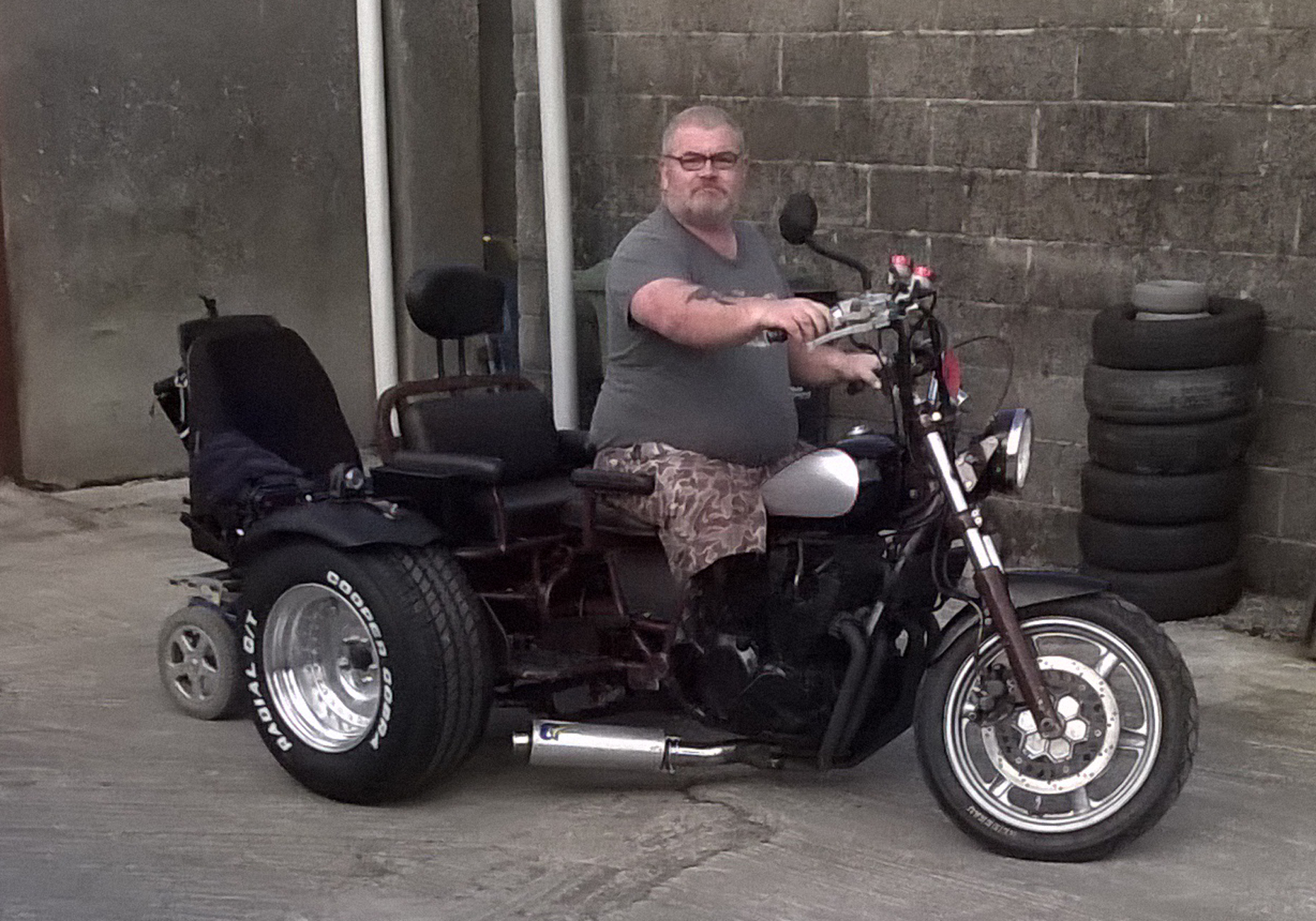
For most people who use wheelchairs, a three-wheel adaptation, such as a trike conversion, factory-built trike, or motorcycle with a sidecar, offers the safest and most practical solution for independent riding on UK roads.
A three-wheel configuration provides inherent stability, eliminating the need for the rider to manually stabilise the vehicle at any time.
- Quadbikes can also provide a stable alternative for people who use wheelchairs.
The use of sidecar combinations and quadbikes are covered by separate guides in the ‘Adaptations’ section of the NABD website.
Adaptation Considerations:
A broad range of trike control adaptations are available for people who use wheelchairs. Where reduced mobility or function precludes the safe, comfortable and efficient use of foot-operated controls, hand control adaptations will be required.
- Rear Brake Adaptations:
There a several methods of adapting the rear brake system to hand control on a trike. Where the user prefers to retain independent control of the front and rear braking systems, twin lever units, thumb brakes, or a lever on each handlebar, are all valid options.
Having all of the main braking systems on a trike operated by a single control is also a valid option because the law governing the braking systems of trikes brakes markedly from the law governing the braking systems of motorcycle.
A mechanically operated and maintained parking brake (aka ‘hand brake’) system is a legal requirement for trikes, as it is for cars, and the operating lever must be positioned in such a way that the rider can operate it in an emergency situation.
- Adaptation Kits:
Some adaptation options are available in off-the-shelf ‘kit’ form, and details of these can be found in the ‘Adaptation Kits’ section of the NABD website; https://nabd.org.uk/adaptation-kits/.
- Reversing Mechanism:
As people who use wheelchairs are will be unable to manually manoeuvre a trike in and out of parking places or garages etc, a reversing facility is essential.
There are a number of options available including:
- Reversing differential gearboxes
- Inline reversing gearboxes
- Internal adaptation kits for the main transmission/gearbox (certain models of big twins)
- Electrical motorised reversers
Of the four, we have experienced the most dissatisfaction with electrical motorised reversers, with many reports of burnt-out reversing motors, damaged electrical systems and/or drained and damaged batteries.
- I have yet to write a guide to reversing adaptations but check the ‘Adaptations’ section of the NABD website, because it will go on there when I have found the time to write it.
- One-off Adaptations:
Some adaptations, such as wheelchair carriers, detachable backrest with hinged side-supports/arm-rests and secure footplates, may require some development and fabrication to suite individual requirements.
We strongly recommend that customers and engineers work together to ensure these adaptations are best suited for the purpose and comfort of the individual.
- Wheelchairs and Wheelchair Carriers:
Wheelchair users should put a lot of thought into the type of wheelchair they will require when travelling and their ability to collapse (or dismantle) and stow it independently once seated on the trike.
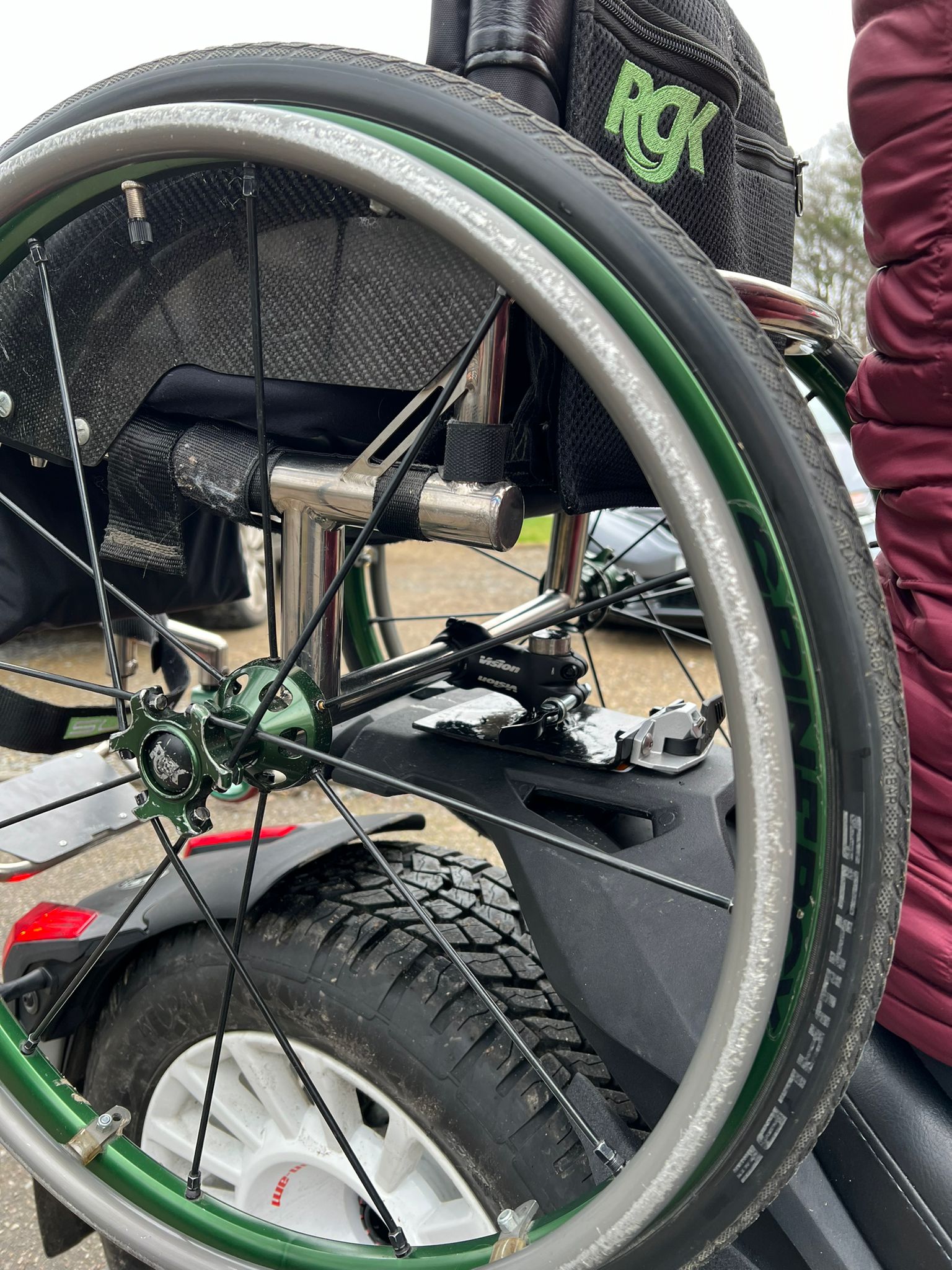
Ideally, wheelchair carriers should be designed to suit the specific wheelchair being used and should allow for wholly independent use by the rider.
- Seats:
We also recommend that seats are replaced with Gel seats rather than relying on Gel pads, both for the comfort of the rider and the appearance of the machine.
Where possible, seat height should be adjusted to facilitate ease of transfer to and from the wheelchair.
Donor Motorcycle:
Most motorcycles can be converted to trikes, but models of at least 750cc are recommended to ensure adequate power to deal with the additional weight and engine loading inherent in a trike conversion. For a trike that is to be used for touring, a 1,000cc minimum would be better.
Some models of motorcycle lend themselves better than others as a donor motorcycle to be converted to a trike that is to be ridden by a wheelchair user.
Motorcycles with automatic transmissions, such as those equipped with Honda’s Dual Clutch Transmission (DCT), are eminently suitable as donor motorcycles for wheelchair user’s trikes.
Cruiser-style motorcycles are often ideal due to their lower seat height and relaxed riding position.
If I had to choose one currently available model of motorcycle as being most ideally suited for converting to a trike for people who use a wheelchair, it would be the Honda CMX1100T Rebel DCT, though this is purely my own opinion rather than a recommendation by the NABD.
Manual transmission motorcycles can also be converted into trikes but they may require additional adaptations, such as a push-button gear changer, to provide a hand-operated gear change.
Reliability:
For wheelchair users, a custom trike conversion by an experienced engineer is recommended to ensure safety, comfort, and reliability.
Also, due to the increased vulnerability in the event of a vehicle breakdown, a reduced ability to carry-out roadside repairs and an inability to manually manoeuvre a motorcycle, we strongly recommend that wheelchair users, whenever possible, use a brand-new donor motorcycle to ensure a high level of reliability and avoid being left in a vulnerable position due to a vehicle breakdown.
Attempting to modify a second-hand trike may compromise reliability and is not advised.
Trike Conversion/Adaptation:
Essential features for such bespoke trike conversions include:
- Hand-operated controls
- A reversing mechanism
- Optimised seat height to ease transfer
- Stable and comfortable riding position
- Ergonomic and intuitive controls setup
- A back rest that affords longitudinal support but can easily be removed to allow easier mounting/dismounting
- Hinged armrests that afford lateral support
- A lap strap or harness
- Footplates or running boards with Velcro straps to keep feet securely in place
- Thigh straps to prevent the legs splaying out under wind pressure
- A Gel seat to reduce the risk of pressure sores
- A secure large capacity luggage facility
- A wheelchair carrying system designed for independent use*
* Wheelchair carriers should be tailored to the user’s needs and developed collaboratively with the user to ensure practicality and independence of use.
Examples of motorcycle-to-trike conversion and adaptations required by a paraplegic rider:
Example 1: A 1,746cc Harley Davidson Lowrider (seat height 690mm [27.1-inches])
Adaptations required.
- Trike conversion with independent rear suspension
- Exhaust reshape
- Belt drive to chain drive conversion to facilitate reversing mechanism
- Reversing mechanism (QBA2R Quaife reversing differential unit)
- Easy-steer yolks to reduce steering effort
- Kliktronic gear changer to facilitate hand control gear changes
- K-Lever2 twin lever to facilitate rear brake conversion to hand control
- Rider backrest with hinged arm rests to provide lateral support when riding
- Footplate adaptations
- Gel seat to reduce pressure related skin issues
- Custom made wheelchair carrying rack
- Lap-strap seat belt
- Thigh straps to counter wind deflection
- Riderscan parabolic mirror to compensate for reduced ability to check blind spot
- Windshield to reduce wing pressure on the upper body
- Secure Monokey luggage box
- Mechanical parking brake
- 12v power socket & USB charging socket
Example 2: A Honda CMX1100T Rebel DCT (seat height 710 mm [27.9-inches])
Adaptations required.
- Trike conversion with independent rear suspension
- Exhaust reshape
- Inline reversing gearbox (Elite Racing Transmissions)
- Easy-steer yolks to reduce steering effort
- PFM twin lever to facilitate rear brake conversion to hand control
- Rider backrest with hinged arm rests to provide lateral support when riding
- Footboards with heel rail & Velcro straps
- Gel seat to reduce pressure related skin issues
- Custom made swivelling wheelchair carrying rack
- Lap-strap seat belt
- Thigh straps to counter wind deflection
- Riderscan parabolic mirror to compensate for reduced ability to check blind spot
- Windshield to reduce wind pressure on the upper body
- Secure Monokey luggage box
- Mechanical parking brake
- 12v power socket & USB charging socket
Production Factory-Built Trikes:
Factory built trikes can also be adapted to suit the needs of people who use wheelchairs. Some of the very high-quality manufacturers are also experienced in adapting their trikes for people who use wheelchairs. These include:
- Rewaco Trikes, UK Dealerships:
- The Trike Guy Ltd, of Chapel-En-Le-Frith in Derbyshire, https://www.thetrikeguy.co.uk/
- Rewaco Trikes Scotland, of Brechin in Scotland, https://rewacotrikesscotland.com/
- Can-Am Trikes, UK Dealerships:
- Offshore Performance, of Poole in Dorset, https://offshoreperformance.co.uk/
- LondonSpeed/GSTech, of London, https://londonspeed.co.uk/
- The Trike Guy Ltd, of Chapel-En-Le-Frith in Derbyshire, https://www.thetrikeguy.co.uk/
- Other producers and dealerships are available.
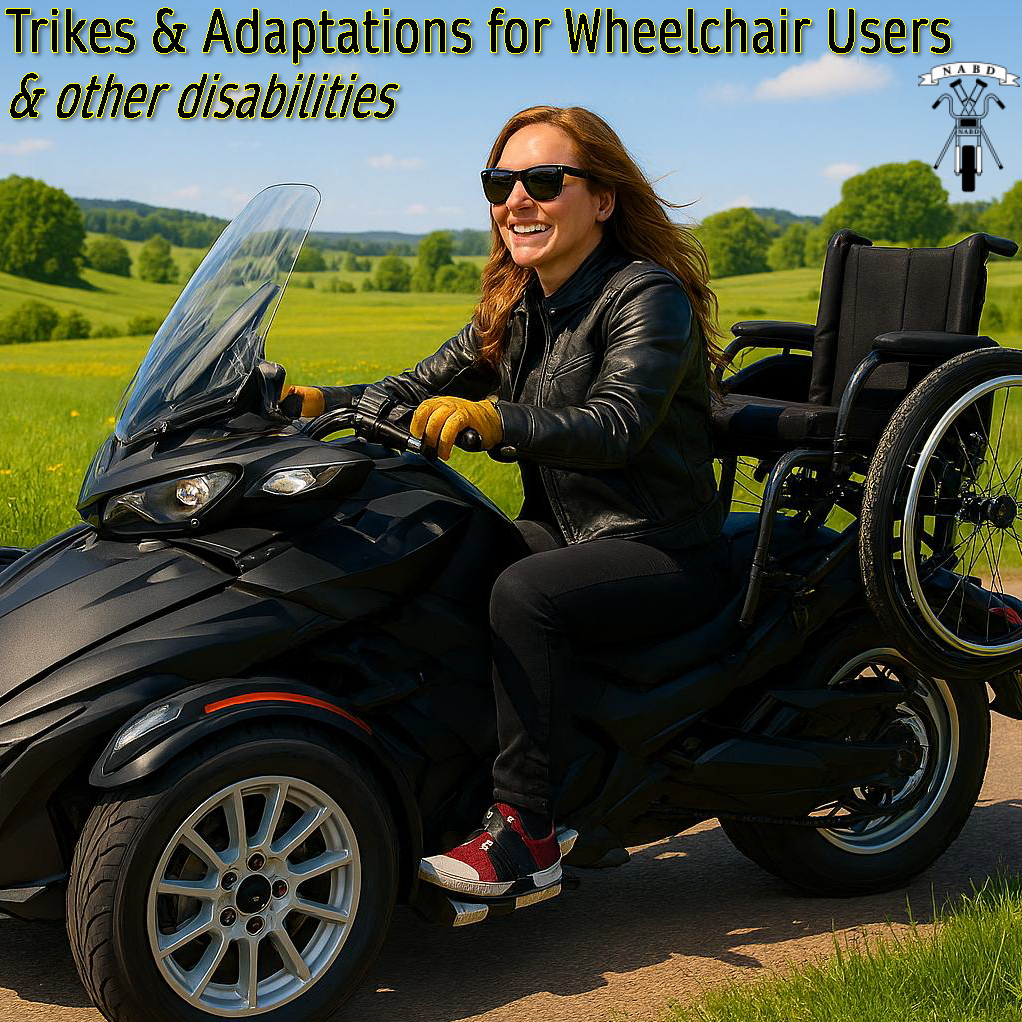
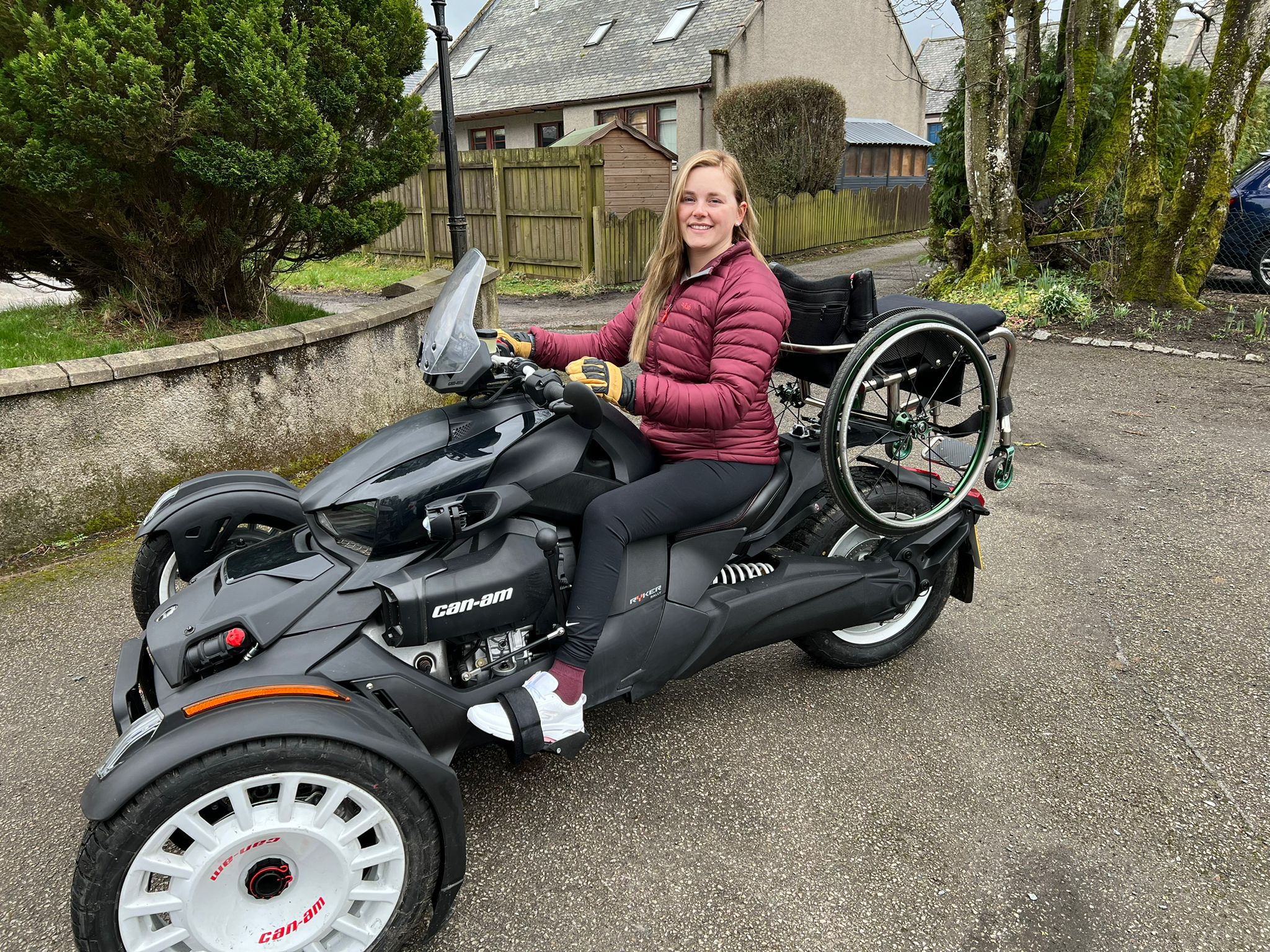
Both Rewaco and Can-Am produce models of trike that have automatic transmission fitted as standard, which makes them eminently suited to being adapted to suit the needs of people who use wheelchairs. Some Can-Am models also feature power steering, which can be a real boon for some people who use wheelchairs.
Examples of factory-built trikes and adaptations required by a paraplegic rider:
Example 3: A Rewaco PUR GT Trike (Automatic transmission & reverse gear as standard)
Adaptations required.
- Easy access sidebar adaptation to facilitate transfer to and from wheelchair
- Rear brake adaptation to hand control
- Rewaco cruise control
- Gel seat to reduce pressure related skin issues
- Custom made wheelchair carrying rack
- Rider backrest with hinged arm rests to provide lateral support when riding
- Foot bars with heel rail & Velcro straps
- Lap-strap seat belt
- Thigh straps to counter wind deflection
- Riderscan parabolic mirror to compensate for reduced ability to check blind spot
- Windshield to reduce wind pressure on the upper body
- Secure Monokey luggage box
Example 4: A Can-Am Spyder RT Trike (Automatic Transmission, windshield, reverse gear & Power Steering, as standard)
Adaptations required.
- Foot Brake adaptation to hand control
- Gel seat to reduce pressure related skin issues
- Custom made wheelchair carrying rack
- Rider backrest with hinged arm rests to provide lateral support when riding
- Foot bars with heel rail & Velcro straps
- Lap-strap seat belt
- Thigh straps to counter wind deflection
- Riderscan parabolic mirror to compensate for reduced ability to check blind spot
- Windshield to reduce wind pressure on the upper body
- Secure Monokey luggage box
VAT Exemptions:
For people who use wheelchairs, having a trike adapted prior to the point of sale can have the added advantage of the vehicle and the adaptations being rated at 0% for VAT (subject to qualifying conditions).
If the adaptations are carried out after the vehicle has been purchased, it is only the cost of the adaptations qualify for 0% VAT.
For more information about VAT exemptions see: https://nabd.org.uk/vat-exemptions/
UK Trike Engineers/Builders:
During the first half of 2025 we saw the retirement of three of the UK’s most experienced, innovative and well-respected custom trike building companies* each of whom had built and adapted many trikes for disabled riders over the past few decades.
- Trike Design Ltd, of Caerphilly in South Wales, ceased trading in February 2025.
- The Trike Shop, of Cardiff in South Wales, ceased Trading in March 2025.
- DTB Panther Trikes, of Liversedge in West Yorkshire, ceased trading in April 2025.
* For more information, see the article entitled ‘End of an Era’ in the News section of the NABD website: https://nabd.org.uk/news.
Fortunately, a handful of reputable companies continue to provide these specialised services with an equal flair for inventive and dependable adaptive engineering solutions to the problems faced by disabled people who wish to enjoy the freedom and independence of motorcycling.
Amongst the most experienced and celebrated of these are:
- Casarva Trikes, of Peterborough in Cambridgeshire, https://www.casarva.co.uk/
- Grinnall Trikes, of Stourport-on-Severn in Worcestershire, https://www.grinnalltrikes.co.uk/
- Diamond Trikes, of Portadown in Northern Ireland, https://www.facebook.com/p/Diamond-Trikes-100057448869180/
- There may well be other reputable, experienced, professional trike builders and custom engineering companies who are skilled in adaptations to suit the needs of disabled bikers that we may be currently unaware of. If you wish to recommend one from your own personal experience, please contact the NABD office via office@thenabd.org.uk with full contact details and the reason for your recommendation.
NABD Assessment Trikes:
The NABD currently own two trikes (one with manual transmission, the other with automatic transmission) that are set-up to suit the needs of wheelchair users. Many people who use wheelchairs have benefitted from being assessed on one or both of these trikes, to gauge their specific needs and preferences before committing to ordering a trike of their own.
If you think you might benefit from an assessment, email the NABD office office@thenabd.org.uk for further details.
- This is a free service for NABD members, though we are happy to receive reasonable donations from non-members who wish to take advantage of it.
NABD Adaptation Grants:
The NABD Adaptation Grants system may be able to offer some financial help with the cost of necessary adaptations. These grants are available up to a maximum of £2.000.00 per individual. For more information and application forms: https://nabd.org.uk/grants/
It is a core tenet of the NABD that, when it comes to motorcycling, a disability need not be a handicap!
Rick Hulse
NABD Chairman

Reviews
4.9 Star rating
The new Zeffy membership portal!
Hi, thanks for looking at the new NABD website, we hope you find it informative, interesting and helpful, we’d love to hear your feedback! As part of the new web [...]
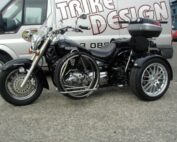
The End Of An Era
Two legendary trike builders close their doors, ending a remarkable chapter in the history of adapted motorcycling.
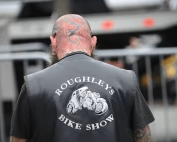
Roughley’s Bike Show 2025 – A Triumphant 25th Anniversary
Roughley’s Bike Show celebrated 25 years in style raising £33,000 for charity and presenting NABD with a generous £2,500 donation in support of disabled riders.
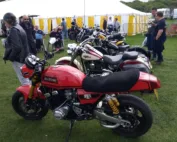
30th and Final “You’ve Been Nabbed” Rally
The landmark 30th rally was held at the Royal Cheshire Showground in early May 2023. It was a grand send-off, drawing around 3,000 attendees for live music, comedy, trade stands, [...]
Media Coverage Reflects the Rally’s Legacy
Motorcycle News (MCN) provided detailed coverage of the final rally in March 2023, highlighting its festive atmosphere and NABD’s strong legacy of supporting disabled motorcyclists.